I recall my first "big" tank. It was a 55-gallon long I found at a garage sale. I was convinced I could fit a little army of Neon Tetras and a couple of Angelfish in there. I did the mental math. I used the outmoded "one inch of fish per gallon" rule. Its a classic, right? total disaster. Within two weeks, I was battling a nitrate spike that looked like a chemistry project gone wrong. My fish were gasping. I was panicked. That was the hours of daylight I realized my eyes are terrible at estimating volume. Now? I dont even purchase a sack of gravel without pulling out an aquarium capacity calculator.
It sounds overkill. I know. People tell me, "Its just a bin of water, just occupy it up." But it isnt just a box. It is a biological pressure cooker. If you acquire the numbers wrong, whatever else fails. Here is why the tank volume matters more than the glass dimensions.
Understanding the legal Bio-Load and Water Displacement
Most people look at the sticker on the tank. It says 20 gallons. They think they have 20 gallons of water. They don't. You have to account for the substrate displacement and the hardscape volume. I once measured a 20-gallon "high" tank. After addendum two inches of fluorite sand and a terrible fragment of Malaysian driftwood, I actually abandoned had more or less 16.2 gallons of water. That is a all-powerful difference.
If I had stocked for 20 gallons, I would have been overstocked by approximately 20%. That leads to ammonia buildup and troubled fish. An aquarium capacity calculator lets you input the thickness of your sand bed. It asks for the weight of your rocks. It gives you the "Net Water Volume." This is the without help number that actually matters for your filtration system.
I use a specific technique I call the "Displacement Constant." Its something I picked in the works from an out of date breeder in Germany. You calculate water volume in aquarium the raw liters. You subtract 15% for the "junk" inside. But even that is a guess. A digital water volume tool is precise. It takes the guesswork out of the equation. Why guess in the same way as you can know?
Why I foul language By An Aquarium knack Calculator For all My Setups and Stability
Lets talk more or less chemistry. Smaller volumes of water are harder to keep stable. We all know this. But how little is too small? once you use a nanotank volume calculator, you see how fragile things are. A 10-gallon tank loses water to evaporation all single day. As the water level drops, the incorporation of minerals goes up.
Ive had setups where the salinity levels swung wildly because I didn't calculate the top-off volume correctly. Now, I use a calculator to find the exact surface area. Why? Because oxygen exchange happens at the surface. A tall, thin tank has less surface area than a wide, shallow one. Even if they preserve the similar amount of water, the broad one can support more fish.
I recently set happening a 40-gallon breeder. My aquarium power calculator told me the surface area was passable for 30% more bio-load than a all right 40-long. That is huge information. It distorted how I bought my speculative of Harlequin Rasboras. Without that data, I would have been playing a guessing game similar to their lives. Isn't that a bit dark? Maybe. But the stakes are high in a closed ecosystem.
Precise Dosing for Medications and Fertilizers
This is where it gets scary. Have you ever had to treat Ich? Or maybe some fungal infection? Most medications tell "one teaspoon per 10 gallons." If you think you have 30 gallons but you actually have 24, you are over-medicating. You are literally poisoning your fish. Ive seen people wipe out entire colonies of shrimp because they didn't account for rock displacement.
I taking into consideration met a guy who swore his tank was 75 gallons. He dosed for 75. Turns out, like his custom-built 3D backgroundwhich was gorgeous, by the wayhe isolated had virtually 58 gallons of actual water. He nearly crashed his nitrogen cycle because the meds were too concentrated.
I never dose anythingliquid CO2, fertilizers, or medswithout checking my aquarium volume math. I keep a spreadsheet. all tank has its "Net Actual Volume" written upon a fragment of photo album upon the underside of the stand. Its my Bible. Using an aquarium power calculator isn't just more or less the initial setup. Its nearly the long-term maintenance. Its virtually not killing your pets by accident.
Estimating the Weight for Floor Integrity
Here is a point people rarely chat about: the weight. Water is heavy. in point of fact heavy. A gallon of water weighs nearly 8.34 pounds. If you have a 125-gallon tank, you aren't just looking at a lovely view. You are looking at greater than 1,000 pounds of weight sitting on your floor.
I sentient in an older house. The floorboards creak if I promenade too fast. previously I set stirring my "Monster Tank," I used a tank weight calculator. I had to factor in the glass thickness, the stand, and the 150 pounds of stone. The total came out to approximately 1,600 pounds.
If I had just "eyeballed" it, I might have put that tank in a spot where the joists couldn't handle it. Can you imagine the mess? 125 gallons of water in your basement. No thanks. The aquarium capacity calculator helps me determine if I compulsion to reinforce the floor or move the setup to a load-bearing wall. Its a safety tool. Its an insurance policy for your home.
The Myth of the suitable Tank Size
Manufacturers lie. Okay, maybe not lie, but they circular up. A "standard 29-gallon" tank often has internal dimensions that don't quite hit that mark. next you be credited with the trim. after that you accomplish you don't occupy it to the unquestionably brim. You leave an inch of air at the top.
Ive used an internal volume calculator upon every tank Ive owned in the last five years. Im always surprised. Most "5 gallon" kits are lucky to support 4 gallons of actual swimming space. gone youre dealing taking into account yearning species once Betta fish or Caridina shrimp, that one gallon represents 20% of their world.
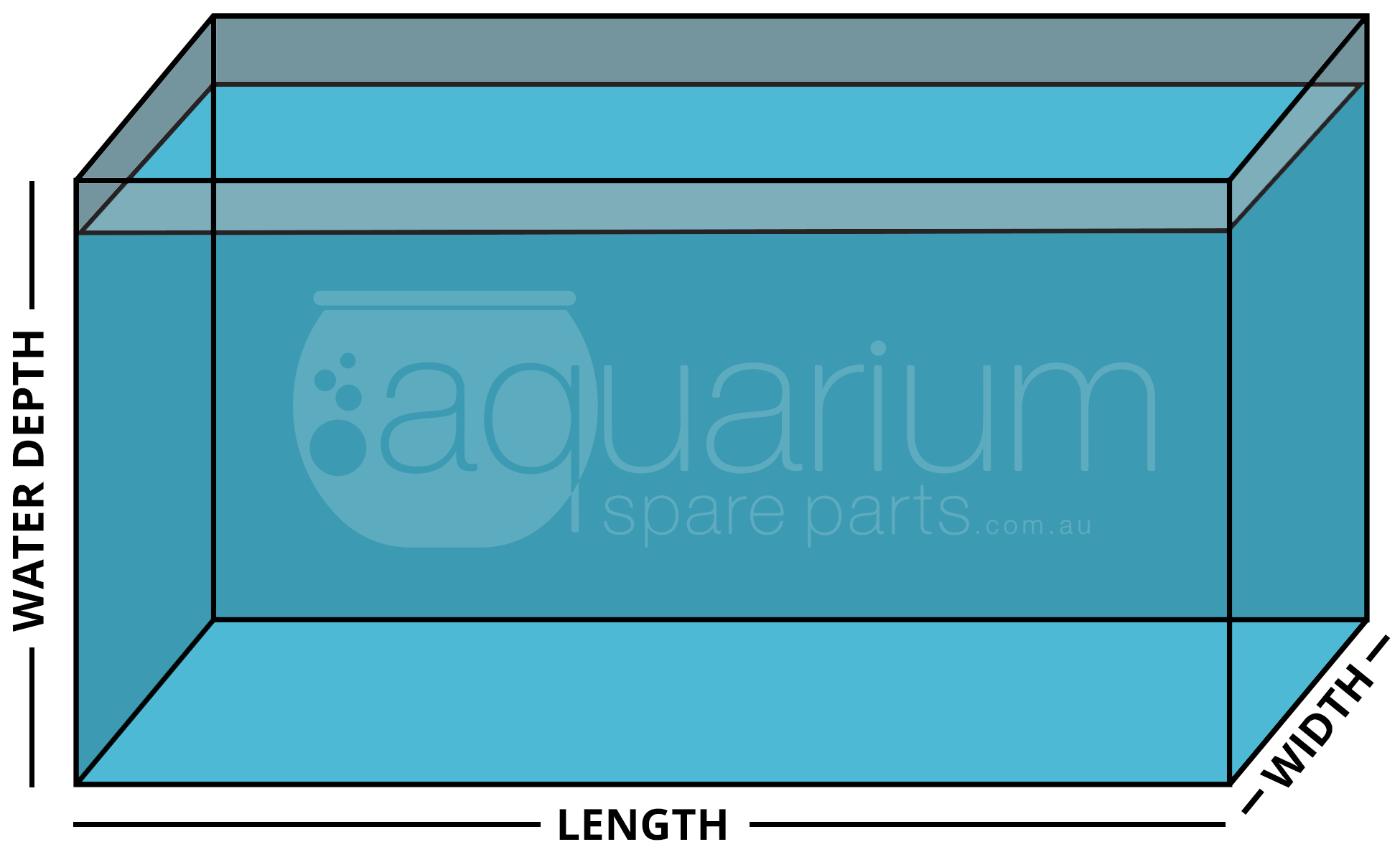
I name-calling by these calculators because they force me to be honest. Its simple to acquire caught occurring in the activity of a supplementary scape. You see a frosty rock. You buy it. You don't pull off that rock just took away half a gallon of water. The calculator keeps my ego in check. It reminds me that I am managing a liquid environment, not just a sober shelf.
Optimizing Filtration and Flow Rate
If your aquarium filter is rated for 50 gallons, but your tank actually holds 55, youre under-filtering. But what if your tank without help holds 40? then you might have too much flow. Some fish, subsequent to Gouramis, despise a whirlpool. Others, taking into account Hillstream Loaches, crave it.
By knowing the correct gallonage, I can pick a filter that provides the perfect turnover rate. I usually purpose for 10 era the volume per hour. If my aquarium capability calculator tells me I have 22 gallons of water, I look for a filter that moves 220 gallons per hour. Its a easy ratio, but you cant get the ratio right if the base number is wrong.
I after that use the calculator to figure out heater wattage. The "5 watts per gallon" regard as being is okay, but its greater than before to know the truthful volume. Especially if your room gets frosty in the winter. You dont desire your heater supervision 24/7 because you underestimated the volume. That leads to equipment failure and "cooked" fish.
Personal Anecdote: The great Substrate Blunder
Two years ago, I was air happening a high-tech planted tank. I bought 40 pounds of specialized aquatic soil. I thought, "Hey, this is a 30-gallon tank, itll be fine." I didn't use a substrate volume calculator. I just poured it in.
I ended occurring later a incline that was approximately six inches deep in the back. It looked cool. But taking into account I filled the tank, I realized I without help had practically 19 gallons of water left. The soil displaced pretentiousness more than I anticipated. My liquid fertilizers were unconditionally out of whack. I was dosing for 30 gallons and getting invincible algae blooms because the nutrients were habit too concentrated for 19 gallons.
I had to tear the collect situation down. It was a week of fake wasted. If I had spent two minutes on an aquarium aptitude calculator, I would have known to use less soil or a better tank. Now, Im a convert. Im the boy in the fish buildup subsequently his phone out, typing in dimensions. I acquire looks. I dont care. My tanks are healthy.
Choosing the Right Fish for the Right Volume
Weve every seen it. A goldfish in a bowl. Its heartbreaking. But sometimes, even experienced hobbyists make mistakes. You see a pubescent fish at the LFS (Local Fish Store). Its tiny. You think your 20-gallon is plenty. But you need to know the adult fish size and the volume they require for waste management.
A stocking level calculator often works in tandem considering capacity. It tells you that while a fish might "fit," the volume isn't plenty to dilute their waste. Using a water volume tool helps me stay disciplined. If the math says I'm at 90% capacity, I stop. I don't buy "just one more."
Keeping fish is a responsibility. We are their stewards. Using an aquarium skill calculator is an engagement of idolization for the animals. Its saying, "I care tolerable virtually your health to reach the math." Its not just virtually the hobby; its roughly the ethics of keeping breathing things in glass boxes.
Conclusion: Math is the Best Tool in Your Cabinet
In the end, this occupation is a combination of art and science. The art is the aquascaping, the colors, and the tricks of the fish. The science is the water chemistry, the nitrate levels, and the volume calculations. You can't have the art without the science.
I cruelty by an aquarium aptitude calculator because it bridges that gap. it takes the vagueness out of the "set up" phase. It gives me a unassailable foundation. Whether I'm calculating the CO2 bubbles per second or the amount of dechlorinator to build up during a water change, anything comes support to that one number: the volume.
Dont trust your eyes. Dont trust the box. Trust the math. get yourself a trustworthy aquariums dimensions tool and use it for all single setup. Your fish will thank you. Your floor joists will thank you. And your sanity? Yeah, thatll be a lot more stable too. Its the one tool in my kit I never go without. Why would you ever wing it next the stakes are this beautiful?