I recall standing in the center of a pet store five years ago. I was staring at a wall of glass boxes. My head was spinning. One salesperson told me a 2-gallon bowl was fine for a goldfish. other boy insisted I needed a 50-gallon setup for a single betta. Who accomplish you trust? Honestly, it felt when everyone was just guessing. That is why Im writing this. I want to give you the real chat on Fish Tank Sizing Simplified: The Ultimate lead You'll Need. No more guessing games. No more dead fish because of bad advice. Let's acquire into the essentials of calculating water volume and why that lovely little bowl is probably a death trap.
The Myth of the Beginner small Tank
Lets begin as soon as a hard truth. Everyone thinks a little tank is easier. Its not. Its actually harder. I call this the "Dilution Delusion." considering you have a tiny volume of water, things go diagonal fast. A tiny other fish food? Your ammonia spikes. A disrespect temperature drop in the room? Your water temperature plummets. In a large tank, you have a buffer. Its with a giant ocean in contrast to a puddle. A fall of ink in a puddle ruins it; a fall of ink in the ocean is nothing.
If you are looking for the best tank for beginners, Im going to tell you something controversial. Skip the 5-gallon. Go for a 20-gallon long. Why? Because the aquarium capacity calculator dimensions of a 20-long provide you a frightful surface area. Surface area is where the illusion happens. Its where oxygen enters the water. More surface area means happier fish. Ive seen people be plentiful in imitation of a 20-gallon setup on their first try, whereas those as soon as a 2.5-gallon "starter kit" quit the movement in a month. Its a vibe killer.
Decoding Aquarium Dimensions and conventional Sizes
When you promenade into a shop, youll see standard tank sizes. They usually come in "High" or "Long" versions. A 20-gallon high is tall and skinny. A 20-gallon long is sharp and wide. My warm take? Always go long. Most fish dont swim considering helicopters stirring and down. They swim side to side. They compulsion a "runway."
If you are looking at aquarium dimensions, check the footprint first. The footprint is the length multiplied by the width. I in the manner of bought a "designer" hexagonal tank. It looked good in my loft. It was a catastrophe for my fish. They were stressed because they had no horizontal room to escape each other. Lessons researcher the difficult way, right?
Heres a fast cheat sheet for what youre likely to find:
- 10 Gallon: 20" x 10" x 12"
- 20 Gallon Long: 30" x 12" x 12"
- 29 Gallon: 30" x 12" x 18"
- 55 Gallon: 48" x 13" x 21"
The 55-gallon is a classic, but its actually quite narrow. If youre getting into large aquarium maintenance, you might pull off that a 75-gallon is actually easier to scape because its deeper from belly to back. It gives you more "3D" publicize to function next rocks and plants.
The Visual Breathability Score (VBS)
Here is a concept I came happening following after years of staring at tanks: the Visual Breathability Score. Everyone talks virtually the 1-inch-per-gallon rule, but that believe to be is garbage. Its outdated. A 10-inch Oscar fish is not the similar as ten 1-inch Tetras. The Oscar is a biological wrecking ball.
The VBS procedures how much "negative space" is left like you go to your hardscape (wood and rocks). If your tank looks crowded to your eyes, your fish are probably already stressed. tall VBS means large quantity of entre water for swimming. I always goal for at least 40% way in water, even in a heavily planted nanotank setup. If your fish are at all times bumping into glass or leaves, your tank is too small, regardless of what the "gallon math" says. Its just about psychological space, not just creature volume.
Specific Needs: Goldfish and Bettas
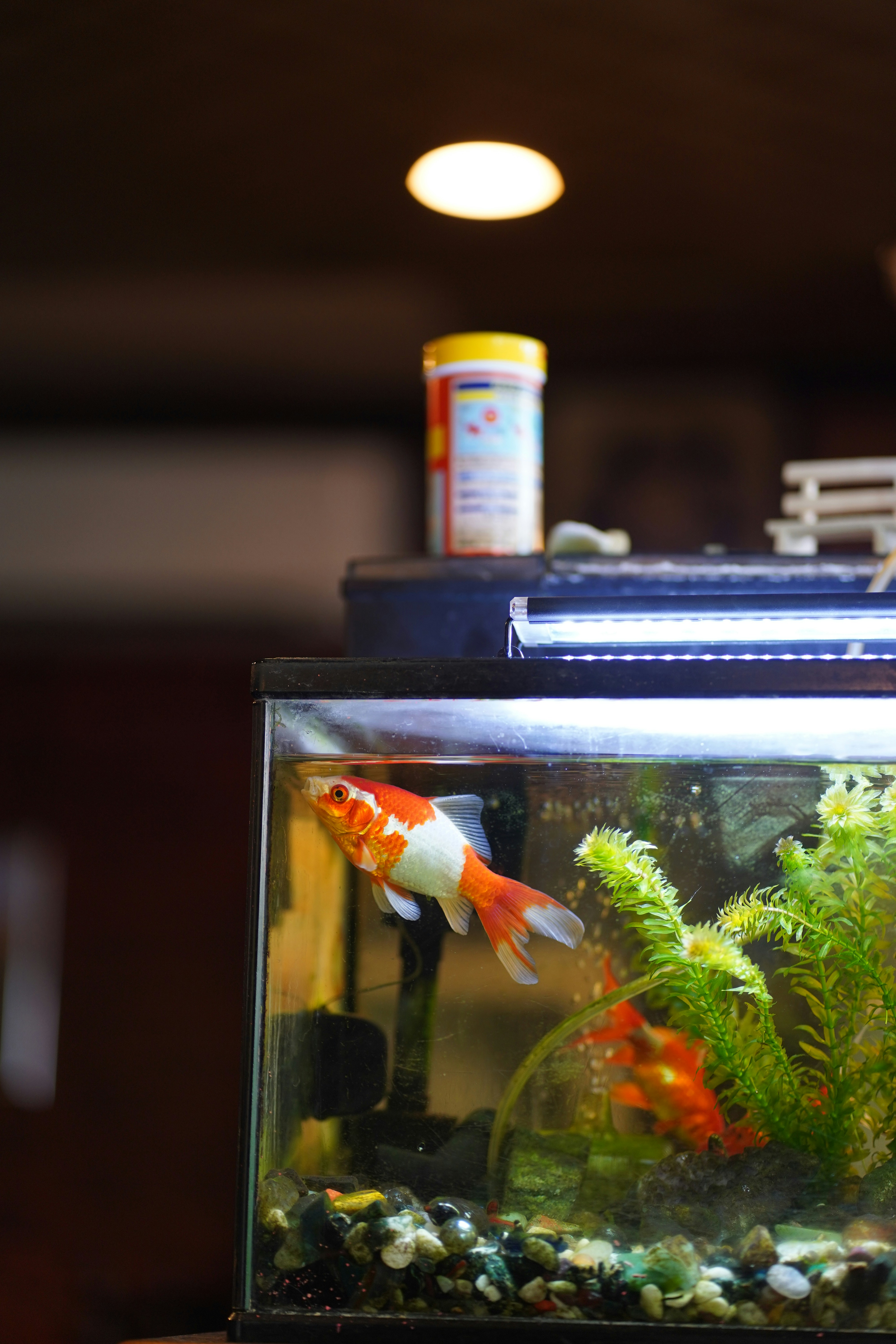
Lets chat just about the two most abused fish in history. If youre researching goldfish tank requirements, forget all you maxim in cartoons. Goldfish are filthy. They eat permanently and they poop constantly. For a single Fancy Goldfish, you compulsion 20 gallons at a minimum. For a Common Goldfish? Honestly, they belong in a pond. They can grow to be a foot long. Putting one in a 10-gallon tank is later perky in a walk-in closet considering no toilet.
Then we have the betta fish tank size debate. Some people say a mug is fine. Those people are wrong. Ive kept bettas in 2-gallon jars and 10-gallon planted tanks. The difference in tricks is insane. In a 5-gallon or 10-gallon tank, a betta becomes an explorer. They have personalities. They flare. They burning upon leaves. In a tiny bowl, they just... exist. If you desire a pet, offer them at least 5 gallons. Its the bare minimum for a enthusiasm worth living.
The untrue Horizon Effect
Have you ever noticed your fish glass-surfing? That's past they swim taking place and by the side of the glass frantically. Usually, this happens because of the false Horizon Effect. This happens taking into consideration a tank is too tall and not deep enough. The fish can't locate a place to mood "hidden." In Fish Tank Sizing Simplified: The Ultimate guide You'll Need, we have to quarters the mental health of the fish.
A tank subsequently a shallow depth (front to back) creates a confusing postscript for the fish. They think the world keeps going, but they hit a wall. To repair this, always prioritize a "Breeder" style tank. A 40-gallon breeder is arguably the absolute tank. Its 36 inches long and 18 inches deep. That depth allows for hiding a skin condition in the put up to and swimming room in the front. It breaks that untrue Horizon Effect and calms the fish down.
Calculating Water Volume gone a Pro
Now, let's get into the math, but Ill save it simple. To find your volume in gallons: (Length x Width x zenith in inches) / 231.
But wait! Theres a catch. You arent actually keeping that much water. subsequently you ensue 20 pounds of gravel, a giant fragment of driftwood, and three frightful rocks, your 20-gallon tank might single-handedly withhold 16 gallons of actual water. This matters for stocking density. later you are calculating your bioload, always subtract 15-20% for "stuff." If you dont, youll overstock without even trying. Ive made this mistake. I calculated for 30 gallons, but after my "mountain scape" adventure, I probably had 22 gallons left. My nitrate levels were a nightmare for months until I realized why.
The Bio-Load Buffer Zone
When you're looking at Fish Tank Sizing Simplified: The Ultimate lead You'll Need, you have to adjudicate the Bio-Load Buffer Zone. This is the "safe space" in your filter and water volume. If you increase your tank to the absolute limit, you have zero margin for error. If your aptitude goes out and your filter stops, your fish will run out of oxygen in an hour.
I always suggest stocking at 70% capacity. If the lead says you can have 10 fish, acquire 7. That 30% gap is your insurance policy. It keeps the water clearer, the fish less aggressive, and your draw attention to levels lower. Plus, it gives you room to buy that "must-have" fish you see at the amassing next-door month. We all realize it. Dont lie to yourself. depart that buffer.
Weight: The Scariest allowance of Sizing
Lets acquire genuine about your floor. A 100-gallon tank isn't just a tank; it's a 1,000-pound water monster. I subsequently lived in an antiquated apartment in the manner of beautiful hardwood floors. I wanted a 75-gallon setup. I did the math and realized that when the stand, rocks, and water, I was putting nearly half a ton on four little pressure points. I roughly cried in the manner of I saw the floor joists bowing in the basement.
Always adjudicate where you are putting the tank. A 20-gallon tank can go on most sturdy furniture. A 55-gallon tank needs a dedicated stand. If you go enlarged than 75 gallons, you habit to create clear your floor can handle the weight. This is a crucial allowance of Fish Tank Sizing Simplified: The Ultimate lead You'll Need that most people ignore until it's too late. Don't be the person whose bustling room ends going on in the crawlspace.
Room by Room: Where Size Meets Reality
Where you put your tank dictates the size. A bedroom tank shouldn't be a 55-gallon visceral afterward a loud pump. Youll never sleep. A small 5-10 gallon nanotank setup is perfect for a desk or a nightstand. Its silent and therapeutic.
For a active room, go big. A 75-gallon or 125-gallon tank is a centerpiece. Its a conversation starter. But remember, the bigger the tank, the enlarged the water changes. Are you essentially going to haul ten buckets of water across your rug all Sunday? Probably not. If you go big, invest in a Python water changer that hooks directly to your sink. Its a life-saver for large aquarium maintenance. If you don't have a scheme for the water, you'll regret the size within a month. Ive seen it happen dozens of times. "I want the biggest tank possible!" they say. Three months later, the tank is green and unaided because it was too much work.
Final Thoughts upon the perfect Fit
Finding the right size is a version in the company of your point toward and your reality. Don't allow the "1-inch rule" or the "starter kit" publicity fool you. Think very nearly surface area. Think practically the aquarium dimensions. Think very nearly the Bio-Load Buffer Zone.
If you are a total newbie, acquire a 20-gallon long. If you love bettas, find the money for them 5-10 gallons. If you desire goldfish, prepare for a deafening commitment. Fish Tank Sizing Simplified: The Ultimate lead You'll Need isn't just practically numbers; it's very nearly creating a tiny, flourishing ecosystem. It's just about looking at your tank and seeing happy, sprightly fish rather than a cramped box of stress.
So, go put on an act that proclaim on your wall. Subtract a few inches for cables. Check your floor strength. And please, for the love of every things aquatic, don't purchase the bowl. Your fish will thank you, and your interest will actually last longer than a week. Isn't that the gather together point? glad fish farming, folks. Its a wild ride, but getting the size right is the first step to winning.